Pages

Showing posts with label comic books. Show all posts

Monday, June 3, 2013

RCH

We are so, so close.  SO very, very close.

Nine scenes.  As of the end of our last writers' meeting, Lauren and I had nine scenes and some tweaking and seasoning to do before the draft of Book III in our series is complete.

This . . . has been a momentous undertaking.

"We are the writers.  Surrender now, and we'll see that you are well treated."


Lauren and I first met on the set of a movie project we were both working for.  We discovered, much to our mutual delight, that we could write well together.  After the project swallowed its own head, I waited about a year for any lingering pain to subside and asked if she'd like to write together again.  To my joy, she said yes.  This was the beginning of a magnificent friendship that has since continued to grow and become richer over the last . . . is it eight years?  Wow.

So.  Our first act together was to contact the main cast, the people who had brought the characters to life for us.  There had been a lot of improvisation in front of those cameras, and we asked everyone for their blessing to use their characters and basic appearance for the story.  We lucked out: they were all very cool people and said yes.

Our second act was to create the universe.


Well, not entirely from scratch.  Lauren had been on the movie's writing team well before I signed on, and she had established a lot of the framework and back story.  I won't try to list everything she did here.  Suffice it to say that the bedrock was hers, and I contributed later.

We went through and ditched everything that had been contributed by anyone but she and I.  Then we started at the basics.  It's a magical story, so one of the first things we had to hammer out was how exactly magic works in our universe.  Further, how exactly magic differs from psionics.  The more powerful a magician in a given world is, the better an idea you have to have to keep such things consistent.  And some of these suckers were going to be pretty damned powerful.  We had to establish, for lack of better words, the physics of the story.

Then we looked at the story itself.  We knew where we wanted to start out.  Where would it finish?  And what were the vital parts in-between?  And we set to work to create our tale.  Not a book with some sequels or a book-by-book outline, you understand.  We created a single story arc of elegant complexity that spans four books.

Then we looked at the characters.  We created their back stories, established their passions and habits.  We chose names and relationships.  Then we went back and went over the universe's structure again, tweaking and smoothing so everything would fit.

There were very few absolute rules between us as we shaped and wrought, and we both agreed upon them heartily.  Here are the main ones:



First, no stupid characters!  One of our pet peeves is and has always been when a character would do something agonizingly stupid just to move the plot along - especially when the character should know better.  Worse than that is when a character has abilities that are never used because if they had been there would be no plot.  Better, we feel, to put in the extra work and have a smarter plot than have brainless characters.

This is not to say that our characters will never make silly-ass mistakes under stress.  People do.  It is something that makes them people.  But what they do has to be believable for competent characters of whatever skill level is involved.

Many has been the time that we have spent hours brainstorming over how to solve a conundrum brought on by a character being smart when it would have been easier to have them act like simple-minded dolts.  But we are both agreed: stupid people suck.  No stupid characters, no smart characters being pointlessly stupid.  Ignorant?  Sure.  Emotional?  If the situation calls.  Stupid?  Nay.  We say thee nay.
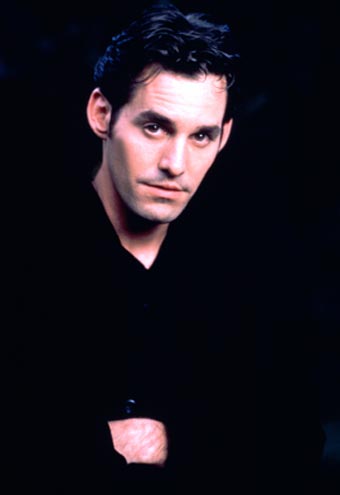
"I have mad skills and keen insights.  Why do I never use them?"


Second, consistency!  A person's abilities might have variables to a limited extent, that's just realistic.  Even Tiger Woods doesn't always play a perfect game.  But again, when the suspension of disbelief is shaken or shattered because suddenly a basic ability or aspect of a character or the universe's physics defrauds itself . . . no.

For example, in Marvel Comics' X-Men, there was a story line where the X-Men were facing an army of vampires.  In one arc within that story, vampires were dead meat puppets without souls or real minds of any kind.  Person dead, soul fled.  In the next arc, Wolverine was killed and turned into a vampire after his healing factor was secretly turned off.  Tests after death showed no human cell activity.  Then Cyclops turned Wolvie's regeneration back on and he was instantly up, no longer undead, and kicking vampire ass as usual.

Under the rules established in the previous arc, this was impossible.  If undead is just dead, Wolverine would have moved on to his eternal rest.  Then again, it was established years ago that his healing factor cannot create life from lifelessness and would not prevent vampirism.  But since Marvel has apparently ditched everything regarding their particular brand of vampirism in favor of something from the Buffy-verse anyway, character consistency apparently didn't matter either.  Another pet peeve.  And again, we say thee nay.

Yeah, we're boned.


Thirdly, research!  This is a close blood-cousin to the second point, but it bears mentioning.  There are too many stories where any reader's understanding of history, or the local color of a place, tears the suspension of disbelief apart.  This is not one of them.  If you live in Excelsior Springs, you'll recognize the places our heroes visit there.  If you know the history of ancient Egypt, the Catholic church, 19th century Britain or the Old West, you'll see how we have meticulously woven our world's threads among those of history's own pages.  We took advantage both of legend and of those pages in history where accident and war have washed time's writings away.  And ladies and gentlemen, it was a lot of fun.  If you are no historian, you'll still enjoy the story.  But if you love history, you will see the game we have created with history's characters.  And you are invited to play.

You are correct.
We used our WABAC Machine.


Fourth: the don't kill the succubus, but don't describe the sewers.  This is a delicate balance, and a bit of explanation is probably due.  In the movie Constantine, there was originally a character who was designed as a kind of friends-with-benefits for the main character.  The only problem was, she was a demon.   She really helped hold several scenes and one plot point together.  But she was deleted out at the last minute, because they thought having a sexual partner didn't make the main character lonely enough.  Odd.  I rather think having a demon be the only person who you could be with would emphasize loneliness.  Did she advance the plot?  Not exactly, but she added to its depth.  When they took her out, the movie suffered for it.

On the other hand, in Les Miserables, there is a scene where the protagonist is being chased by his nemesis and they duck into the sewers.  The action is fast, the tension mounts . . . and then there is a chapter describing the sewers, their construction, and their history through the ages.  By the time the reader gets back to the chase, the momentum is lost.  I haven't read it, but those who have have assured me that the sewers are a major drag.

Chantelle.  Beautiful.  Evil.  A demon in John's debt.
Some days, the closest thing to a friend  he had.


Without her scenes, the sprinkler scene is awkward
and later ones feel contrived.  All to avoid this: 
https://www.youtube.com/watch?v=-i-9AHgOSKs 


And yes, I am meandering.  But I am giddy at the prospect of what is at hand.

Consider the following.  When we first started in 2006, we were working on Books I and II more-or-less simultaneously, with occasional work on III.  Then we were working on Books II and III with some work on IV.  Now we're wrapping up having worked on Book III with occasional work on IV.  And Book III, Where Flap the Tatters of the King, is a monster.  Our most ambitious work to date, it is the point where the threads we wove through Books I and II come together and in a sense it's been almost eight years in the making.  We've woven plot throughout all four books, and we know exactly where we're headed.  And we are nearly done!

To celebrate, we are offering The Order of the Four Sons, Book I, as a free download on Smashwords.  So tell your friends, and feel free to join us.  It has been a hell of a ride.  We've been creating whole worlds for you to explore, and we look forward to sharing them with you.


Non Serviam,
--Coyote.


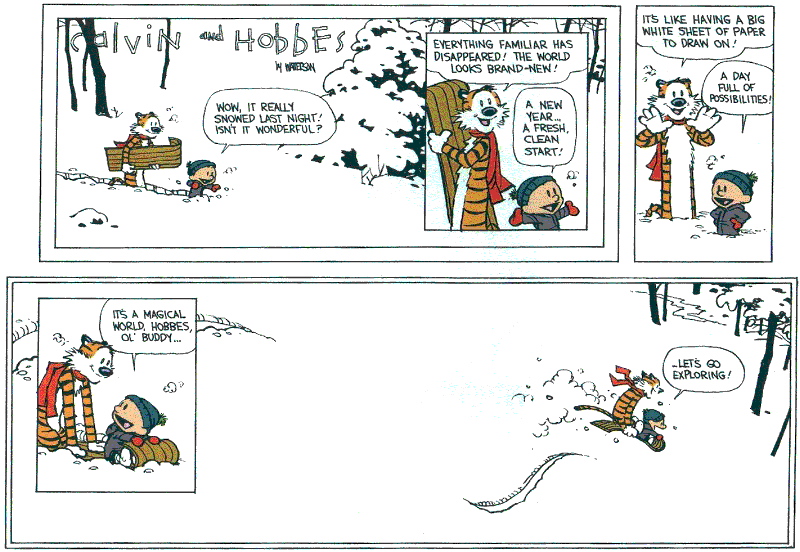
(Don Quixote pic by G.A. Harker; All Buffy characters were created by Joss Whedon; Calvin & Hobbes was created by Bill Watterson; Wolverine is (c) Marvel Comics; Peabody and Sherman were created by Ted Key; John Constantine and Chantelle are both (c) Vertigo Comics, which is a division of DC.  All rights reserved by those who rightfully reserve them, and all that.)

Tuesday, May 7, 2013

Finals Spring 2013

At least, one hopes it is Spring 2013.

We've had Spring once a week here for the last month or so, and I am hoping that this one sticks.  I have finals this week and next, and a large paper due as well.  So, there will be no update next week.  The following week, however, I should have my gazette on the pantheon of Spring 2013, and I hope you will all join me.

There is a constant oscillation for me during finals week for most of my classes.  On the one hand, I know I have this covered.  I am, after all, brilliant and all that.  On the other hand, I know that I am prone to overconfidence.  And so I may stress a little, wondering if my feeling prepared is just me setting myself up for disaster.


I was a dishtowel cape kid.  Completely satisfied that I could fly, and why not, I would leap from huge heights (well, to a four-year-old) and generally come crashing down shortly thereafter   On occasion, there was hang time.  "Aha," I would say to myself, "I'm getting close.  If I could just get a little more altitude."  *WHAM!*  "You know, I think I need a bigger cape."

To this day, my reaction to heights generally comes in two parts.  The first is an instinctive response, independent of all reason, to seeing the round looming cartoon-like stories below: "Hmm.  I could make that.  In fact, if I keep my arms out just right, I bet I cold just glide right over those trees..."

My second response, which is amazingly dependent on reason, offers the democratic response of clutching the nearest stable object and not letting go.  Others, looking on, will misunderstand and try to comfort me with assurances that the railing is quite strong, etc.  And all the while, my hoarse whisper, unheard, "You don't understand, my medulla is trying to kill me!"


Some classes are immune to this effect.  My Anatomy/Physiology class, for example, was amazingly resilient in the face of my self-inflating ego.  But otherwise, when it comes to a blend of competence and cocksurety, I'm pretty well up there with Joshua Norton and Moses.


So, over the next week-plus, I am erring on the side of caution.  And I will say that thus far this has never done me harm.  But in the meantime, between confidence and caution, there will be no post next week.


And I am still looking for a big enough cape.

Sometime again,

--Coyote

(Stupendous Man is (c) Bill Watterson, and so is billionaire playboy Calvin.  No one knows why they have neevr been seen together.  All rights reserved.) 

Friday, June 22, 2012

Captain America


There have been an assortment of Marvel Comics movies put out in the last few years: several Spider Man movies, a few Hulks, and then of course the Iron Man movies, Captain America, Thor . . .

I literally learned to read on collector’s issues.  Daredevil, Journey into Mystery (which later became The Mighty Thor),  Iron Man, FF, and all the rest.  Many of them from issue #1 to the hundreds.  I was there when the FF went to South Africa during Apartheid, and the Thing tore down the walls rather than choose between a “Europeans” or “Coloreds” door, the four of them treading on the signs on their way out.  

Fantastic Four 119 1971, Thing smashing doors
Fantastic Four 119 1971, signs busted

I was there when Namor first found Cap and tossed his frozen form into the sea, reviving him at last.  I was there when Harry Osborne collapsed completely, and tripped on bad hallucinogens for days on end, causing the first Marvel Comics I know of to be published without Comics Code approval.


So, yes, I have seen a lot of writes and re-writes, and a lot of re-interpretations of various legends over time.  Some good, some not so good, and some completely at odds with the original tale but none the less fascinating.  Originally, I was going to review all the various Avengers movies this week.  But that would likely be a bit long even for me.  So instead, I will just go over my latest view: Captain America.


The movie touts him as the “First Avenger,” which works in a movie setting.  In the comics, he was actually a founder of the Invaders, the Allies’ super-hero group.  With him were Bucky, Namor the Sub-Mariner, the original Human Torch (later revealed to be an android; long story), and his mutant sidekick Toro.  Together, they all fought against the Nazi threat.  Which is fine for comics, but in a movie there’s just no room.  Especially when actors keep insisting on ageing faster than their characters.

I wasn’t originally going to even see this movie.  I saw a guy with dark hair and web gear and guns as Cap, and said, “No.”  But Amar gave the movie thumbs-up, and he knows his comics.  So I gave it a shot.

Holy.  Crap.


It would have been so easy for this movie to suck.  Captain America is a hero in the truest sense of the word, powers or not.  He gained his Super Soldier abilities from his own courage and drive to help his country and the world against tyranny.  He is in many ways the ultimate warrior for peace. 

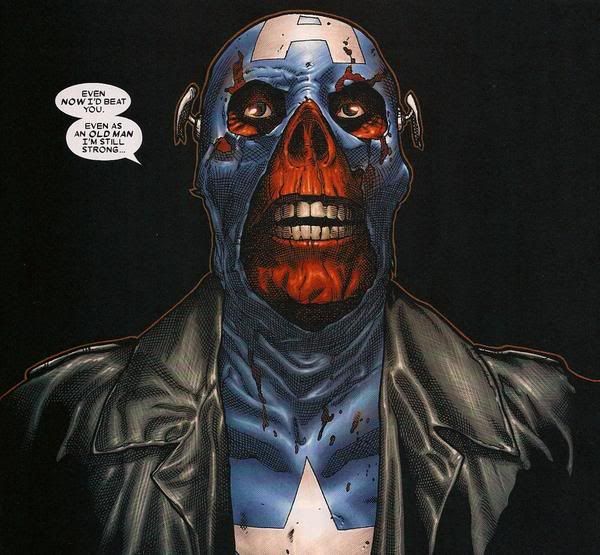
It can be hard to keep such a character human enough to be interesting without getting all Emo about it.  But they managed.  The casting was superb, and the acting incredible.  The sequence of events was believable and well-researched, right down to the shields.  And the actors’ interpretations of the characters were close to flawless.  The Red Skull could have been a bit more cave-wall-licking crazy, though.  He almost invented the villainous rant, and actually tops Doctor Doom in frothing monologue.


Making the Red Skull into a scientist with his own division (Hydra) was an interesting twist, and I’ll admit I’m still pretty unsure about it.  The original Red Skull was a bellboy, in whom Hitler saw the mark of a pure sociopath and groomed him to be the ultimate SS.  The fact that Herr Johann Schmidt was also a genius in many ways was unexpected.  He was a gifted leader, a master strategist, and a brilliant manipulator.  He was almost completely without fear, perhaps due to his psychosis.  And he was responsible for the founding of Hydra, via Baron Von Strucker.  But he was not a scientist. 

He also had a will stronger than almost anyone else on the planet, which resulted in Hitler’s spirit being trapped in the Cosmic Cube for the Red Skull’s amusement.

Oh, yes: the Cosmic Cube.


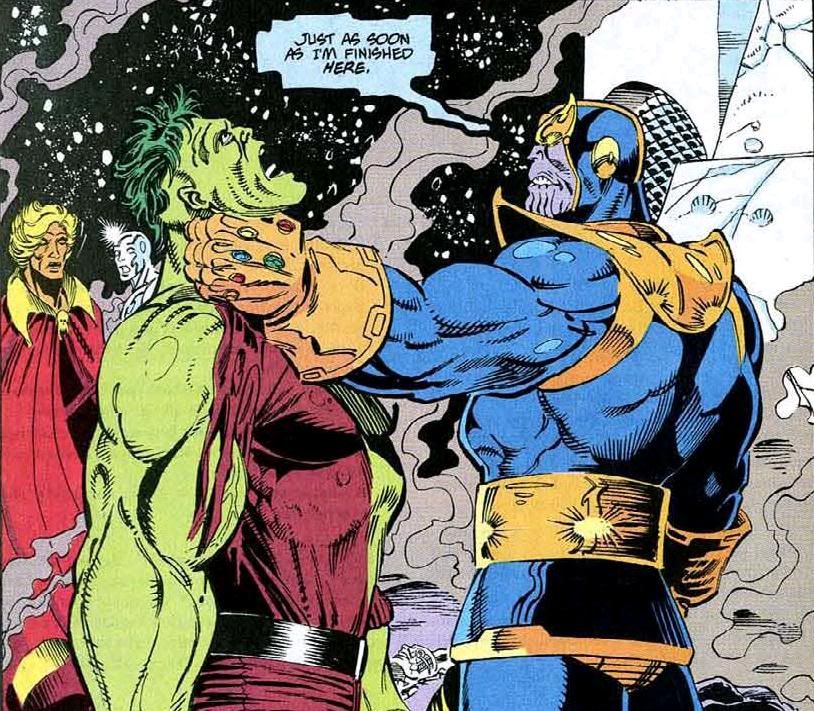
In the comics, Advanced Idea Mechanics semi-accidentally caged a cosmic being of immense power in a cube, with the result that whosoever possessed the widget could manipulate reality itself.  The Red Skull got it, lost it, regained it, used it, lost it again.  It passed from hand to hand to hand and was even used by Thanos the Titan in a bid for universal Armageddon (stopped by the Avengers).  Ultimately it was destroyed / hatched into an entirely different plotline with the Silver Surfer and this guy called the Aquarian. . .

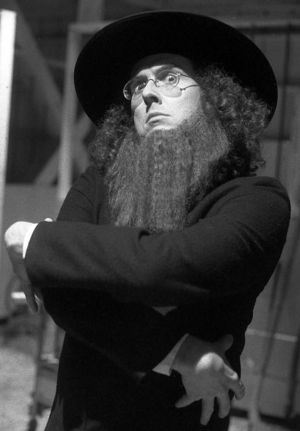
Again, too much for a movie.  Too many years and too damned convoluted.  Comic titles go through writers like a ferris wheel goes through passengers, and tracking fifty years of comic book history is enough to make Carl Sagan foreswear all modern life and become Amish.


The use of the “tesseract” was therefore a good move, and making it a treasure of Odin allowed for the Nazis to want it and for the Red Skull to seek it out.  It also allowed for Arnim Zola, a mad scientist with a brain somewhere between Tony Stark and Reed Richards, to be able to use it.  The Red Skull got his mysterious death from the tesseract (which is just a sixth-dimensional cube, anyway) and Cap was put on ice in a very believable way.  Within the physics of this universe, certainly.

Really, there are only a few points in the movie that bother me.

First was Johann Schmidt as a scientist.  ‘Nuff said on that.

Second was Arnim Zola.  


Doctor Zola was every bit as mad as the Red Skull, if not more so.  In fact, he made Frankenstein at his most manic look like Doctor Oz.  He created artificial life, transferred minds, and experimented on himself to become immortal.  Well, kind of.  


The Red Skull valued him immensely, and, while he didn’t exactly “trust” Zola, he knew how to play him and trusted in his own power to keep the good doctor in check.  Arnim Zola as portrayed in the movie was an expendable sniveler and a coward, doomed to obscurity in the USA’s early NASA projects.

But most of all, there is the death of Bucky Barnes.  


In the comics, Bucky was a kid and a costumed sidekick.  In the movie, he was an old friend and fellow soldier.  And that is a sensible change for a modern audience.  But in the comics, his death is both memorable and catastrophic.  He dies trying to stop a plane trapped by Baron Zemo (another Nazi super-villian), and his death haunts Captain America for decades afterwards, due both to survivor’s guilt and to its connection to Zemo and the Red Skull. 

In the movie, Bucky dies falling off a train, trying to capture the cringing Zola.  Later in the movie, the final epic battle takes place on a super plane loaded with hi-tech bombs.  Why not have him die there?

But these changes are not crippling, and the positive moves that were made in this movie's creation well outweigh the problems and puzzlements that it might pose.  


I understand that Joss Whedon is a fan.  And having seen these movies I believe it.  He understands the genre, keeps to the spirit of the characters, and, as always, his greatest strength is in character interaction and dialogue – which is vital in comic book characters. Let’s face it: on the page, they almost never shut up, even when they’re fighting. 


Of course, in the movie you don't have as much monologue.  I find it refreshing also that the Red Skull is given room to return in later films.  Which, since he has a will that can cheat even death, is only fitting.  And having the Avengers go up against the Red Skull and Hydra in some future movie would be just superb.  Unless, of course, in the movie universe he somehow became Thanos.  Which would also work.

Thanos is one of the baddest villains in the Marvel universe, and is sure to be in the next Avengers movie . . .


Yes.  Well.  No rush.

Ultimately, this movie actually captures the character of Captain America on the screen, and does it well, for the first time that I am aware of.  There have been other attempts, but they have always been terrible.  If you haven’t already seen the latest movie version of Captain America, I heartily recommend it.  And so long as Mister Whedon continues to be given a free hand in his movies, I think they will continue to be well done.  

Tamam Shud,
--Coyote


(Stan Lee is a god of comic books and owns himself; Weird Al Yankovic also owns himself; all other characters (c) Marvel Comics, all rights reserved.)